Generation Z
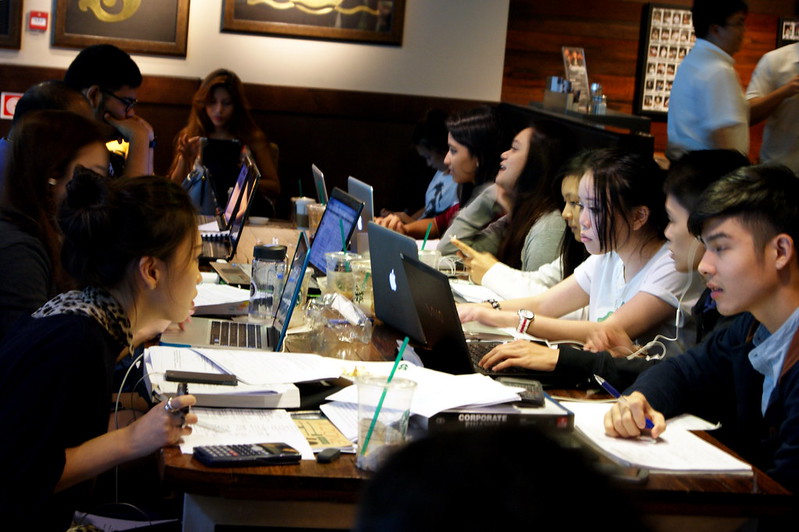
This generation is also known as iGen, Centennials, and Digital Natives. 1 Generation Z starts with those born from approximately 1996 (or 2000) to about 2015. 1 Gen Z is the fastest emerging generation of employees, consumers, and trendsetters who often multitask using technology while simultaneously being involved with other activities.
Gen Z's social skills are changing (or missing) due to emerging technologies. Gen Z's culture is becoming more relational through the use of social media; they are continuously "connected" to the virtual world with their smartphones and talk to each other with emojis, icons and gifs on social media instead of talking on the phone or writing emails. 4 They consume a lot of information in a short amount of time if presented in a digital format. Also, they are sensitive to social events, the environment, technological developments, economy, social injustice and inequality. 4
Traits of Gen Z
- More tech-savvy than any previous generation 3
- Competitive, entrepreneurial, trustworthy, tolerant and less motivated by money (than Gen Y) 3
- Innovative and are adaptive to tech-empowered learning 2
- Ethnically more diverse than any previous generation 3
- Fast-paced in processing information and materials and do not hesitate to ask questions 3
- Prefer learning that is meaningful; their work ethic is more realistic than what Gen Y represents 4
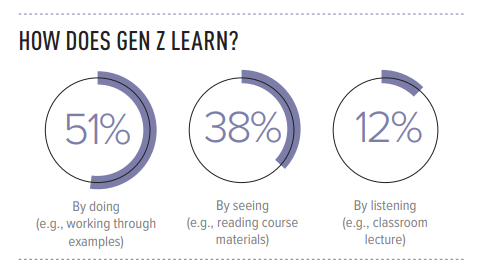
- Tactile learners with shorter attention span 1
Below is a short video about the difference between Millennials and Generation Z learners.
Learning Preferences
- Learning is an active experience for them; this generation is "accustomed to rapid diffusion of information presented in a graphically and technologically sophisticated style" 1
- Most of them prefer working independently because they can work at their own fast pace instead of waiting on someone (but working in teams collaborating on projects is not out of their comfort zone)2
- They rely on online resources; prefer digital technologies and activities that present multi-modal learning experiences 4
- Self-directed of what and how learning occurs; they learn best when they can have an input about what their learning experience is 2,3
- They create or co-create things that they can share 2,4
- Gen Z can manage collaborative learning with social, cross functional, and external partners 2
- They desire practical learning focused on solving real world issues while the instructor addresses questions just in time 2
Practical Tips
- Create frequent dialogue and engagement where activities go beyond traditional knowledge sharing 2
- Develop relevant learning experiences that utilizes technology 2
- Use in-class session as learning labs 2
- Invite subject matter experts, trainers, and other professionals to create high impact learning 2
- Prompt them to co-create content with other learners 2
- Utilize peer coaching, microlearning, videos, social sharing, action mapping, problem-based learning, on-demand content, storytelling, gamification, and guided self-reflection activities 2
- Teach them library literacy skills and citations
It's time again to check your understanding!

Here is one more activity to to test your knowledge on all three generations!

1 Betz, C. L. (2019). Generations X, Y, and Z. Journal of Pediatric Nursing, 44, A7-A8.
2 Kovary, G. (2019, October). The Gen Z learning journey from higher education to the workplace. Online Learning 2019 Conference, Torento, Canada.
3 Peres, P., & Mesquita, A. (2018). Characteristics and learning needs of Generation Z. Proceedings of the European Conference on E-Learning, 464–473.
4 Çora, H. (2019). The effects of characteristics of Generation Z on 21St century business strategies. Kafkas University, Journal of Economics & Administrative Sciences Faculty,10(20), 909–926.
